
The eight limbs of Raja (Ashtanga) yoga from Patanjali’s Yoga Sutras, explained simply.
Raja yoga, the “royal path”, is the yoga of the mind described in Patanjali’s Yoga Sutras. Its famous definition is yogas chitta vritti nirodhah (1.2): yoga is the stilling of the fluctuations of the mind. Patanjali’s method has eight limbs, which is why it is also called Ashtanga yoga (not to be confused with the Ashtanga Vinyasa posture series).
The eight limbs
- Yama – ethical restraints: non-violence, truthfulness, non-stealing, moderation, non-possessiveness.
- Niyama – observances: cleanliness, contentment, discipline, self-study, surrender.
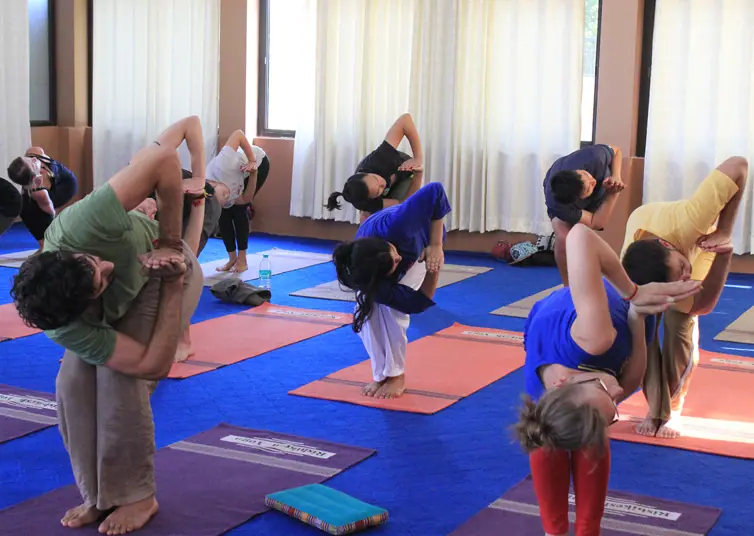
- Asana – a steady, comfortable posture (see What is asana?).
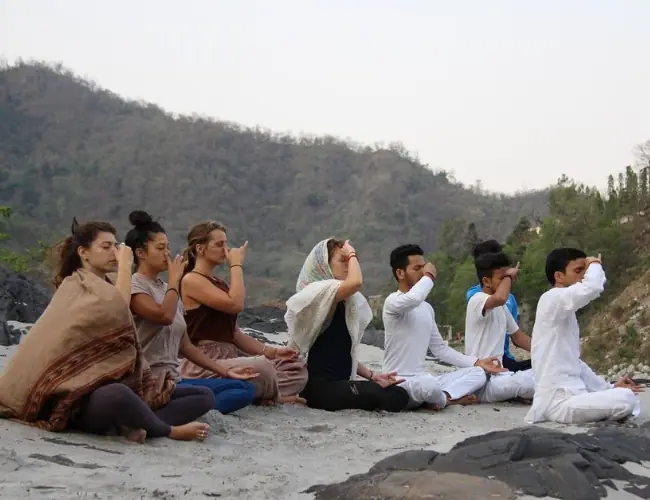
- Pranayama – regulation of the breath (see Pranayama guide).
- Pratyahara – withdrawal of the senses.
- Dharana – concentration.
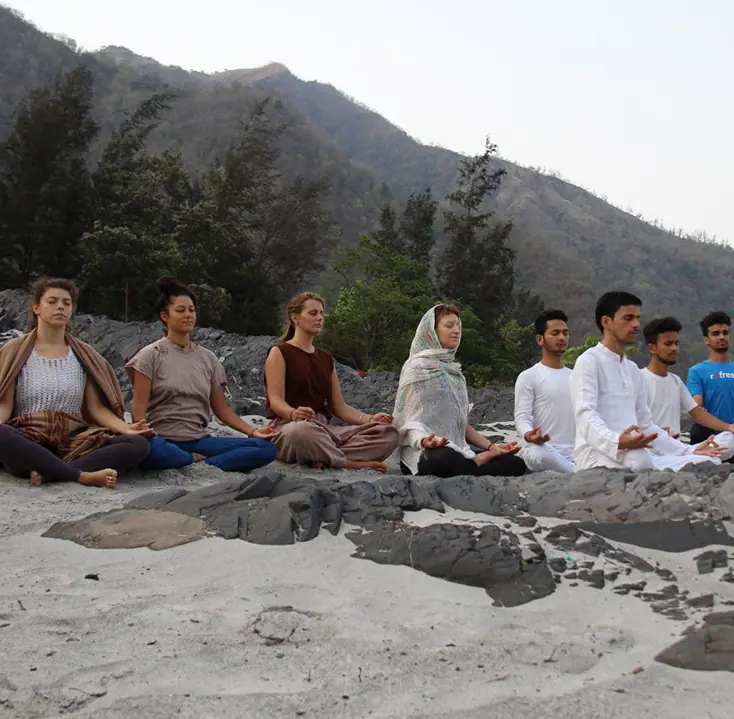
- Dhyana – meditation (see Meditation in yoga).
- Samadhi – absorption, the goal of the path.
How the limbs work together
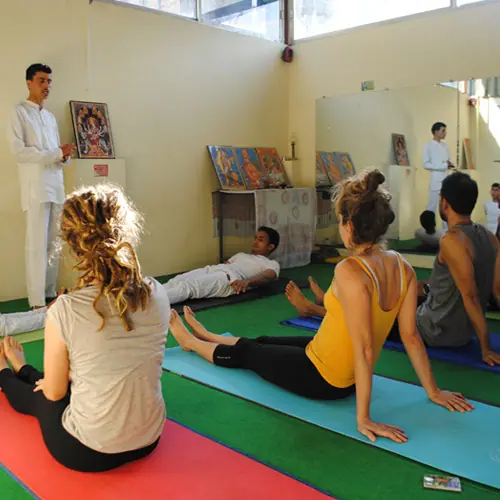
The first five limbs are “external” and prepare the student; the last three are “internal” and happen naturally once body, breath and senses are calm. Modern yoga classes focus mostly on limbs three and four – a teacher training brings back the whole picture.
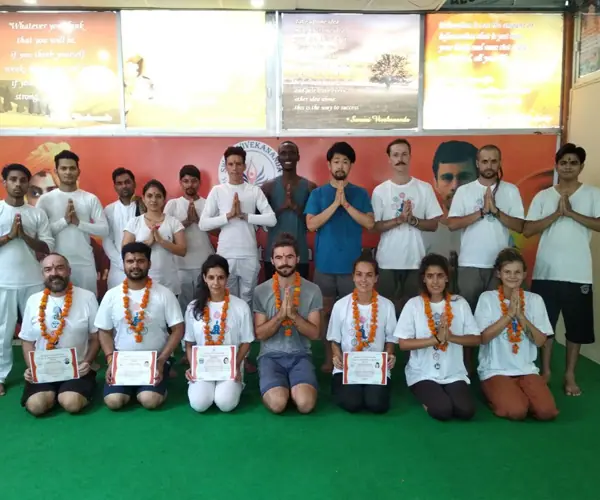
Swami Vivekananda’s book Raja Yoga (1896) introduced these teachings to the West. The Yoga Sutras are studied in depth in our 200 hour and 300 hour yoga teacher training in Rishikesh.