The meaning of pranayama, the main breathing techniques taught in yoga teacher training, and safety guidelines.
Prana means life force and ayama means extension or control. Pranayama is the fourth limb of Patanjali’s Ashtanga (eight-limbed) yoga: a set of breathing practices that calm the nervous system and prepare the mind for meditation.
The three phases of the breath
Classical texts describe puraka (inhalation), rechaka (exhalation) and kumbhaka (retention). Beginners work only with inhalation and exhalation; retention is introduced slowly under a teacher’s guidance.
Main techniques
- Yogic (three-part) breathing – abdomen, ribs and chest.
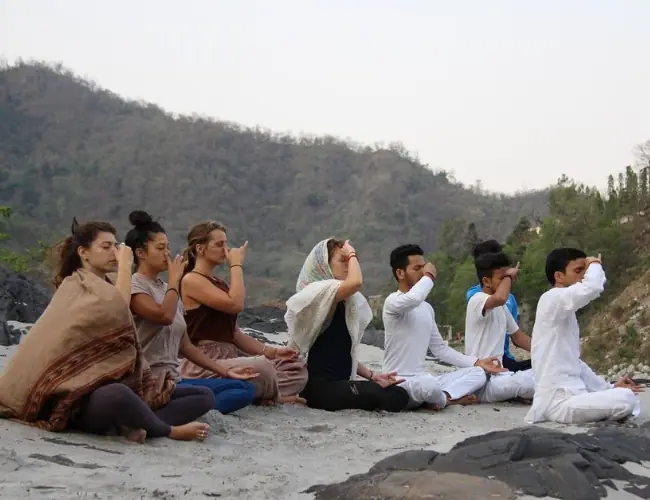
- Nadi Shodhana / Anulom Vilom – alternate nostril breathing for balance.
- Ujjayi – the ocean breath used in Ashtanga Vinyasa.
- Kapalabhati – “skull shining” cleansing breath (also one of the shatkarmas).
- Bhastrika – bellows breath.
- Bhramari – humming bee breath for a calm mind.
- Sheetali and Sheetkari – cooling breaths.
Safety guidelines
- Practise on an empty stomach, sitting upright.
- Never force the breath or strain.
- Avoid fast techniques and long retentions with high blood pressure, heart conditions or during pregnancy.
- Learn new techniques from an experienced teacher.
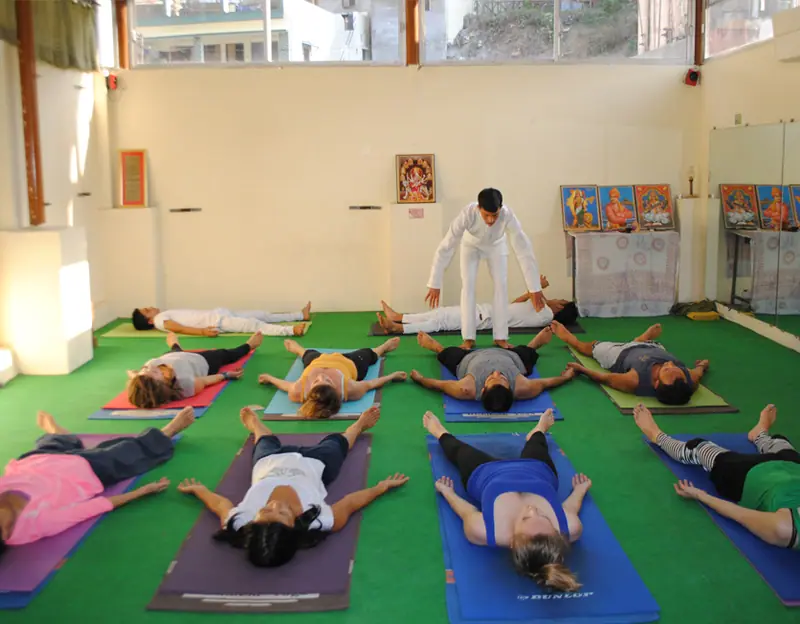
Pranayama is taught every morning in our 100 hour, 200 hour and 300 hour yoga teacher training courses, and as an early class in our daily yoga classes.