
The meaning of asana in the Yoga Sutras, the main families of postures and the principles of safe alignment.
Patanjali defines asana in just three words: sthira sukham asanam – a posture should be steady and comfortable. Originally the word meant a seat for meditation; Hatha yoga later developed a large number of postures to strengthen and purify the body.
Families of postures
- Standing – Tadasana, Trikonasana, Virabhadrasana: strength and grounding.
- Forward bends – Paschimottanasana: calming, lengthen the back body.
- Backbends – Bhujangasana, Ustrasana, Dhanurasana: energising, open the chest.
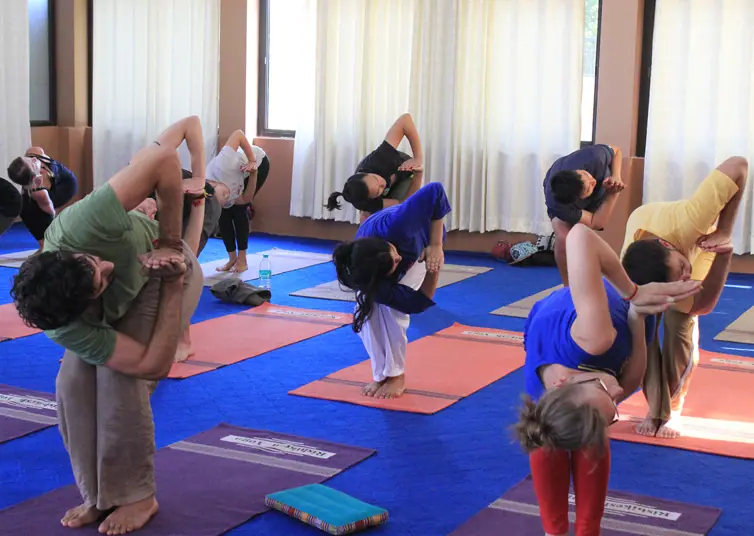
- Twists – Ardha Matsyendrasana: spinal mobility and digestion.
- Inversions – Sarvangasana, Sirsasana: circulation and focus.
- Balances – Vrikshasana, Bakasana: concentration and core strength.
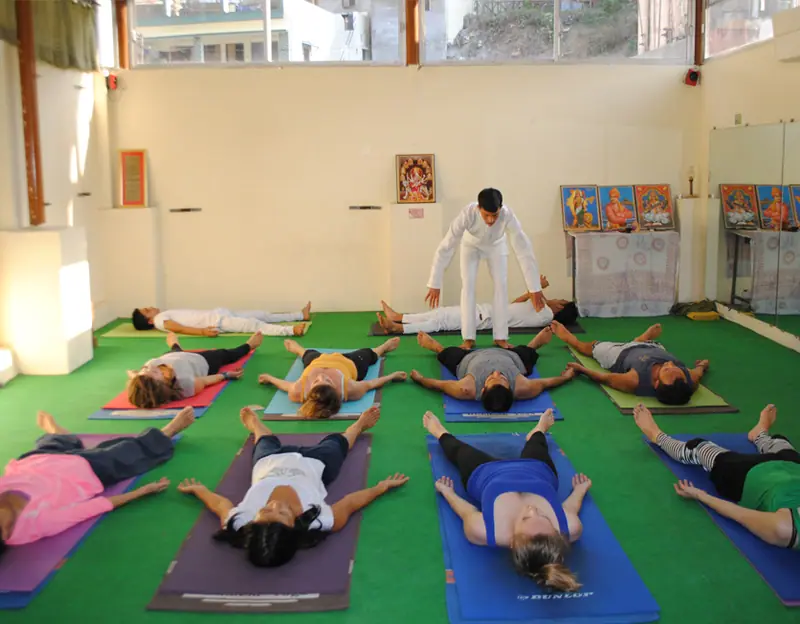
- Relaxation – Shavasana, Balasana.
Principles of alignment
- Build every posture from a stable foundation.
- Keep the spine long before bending, twisting or folding.
- Let the breath stay smooth – if it becomes strained, back off.
- Use props (blocks, belts, blankets) to make the posture accessible.
- Always follow strong postures with a counter-pose.
Asana is practised in many styles – classical Hatha, Ashtanga Vinyasa, Vinyasa flow and Iyengar-inspired alignment work. You learn the details of each posture, its benefits, contraindications and adjustments in our 100 hour and 200 hour yoga teacher training in Rishikesh.