What Ashtanga Vinyasa yoga is, how the Primary Series is structured, and why breath, bandha and drishti matter.
Ashtanga Vinyasa yoga is a dynamic, set sequence of postures linked by the breath, taught in the lineage of Sri K. Pattabhi Jois of Mysore. Every posture is entered and left with a counted vinyasa – a movement synchronised with one inhalation or exhalation.
The three pillars: Tristhana
- Ujjayi breath – a steady, audible breath through the nose that sets the rhythm of the practice.
- Bandha – the energetic locks, mainly Mula Bandha (root) and Uddiyana Bandha (lower abdomen), that give lightness and stability.
- Drishti – a fixed gazing point for each posture that keeps the mind from wandering.
Structure of the Primary Series
The Primary Series (Yoga Chikitsa, “yoga therapy”) always follows the same order: Surya Namaskar A and B, standing postures, seated postures (mostly forward bends and hip openers), the finishing sequence with backbends and inversions, and rest. Because the order never changes, students can measure their progress and move into a meditative state.
Mysore style and led classes
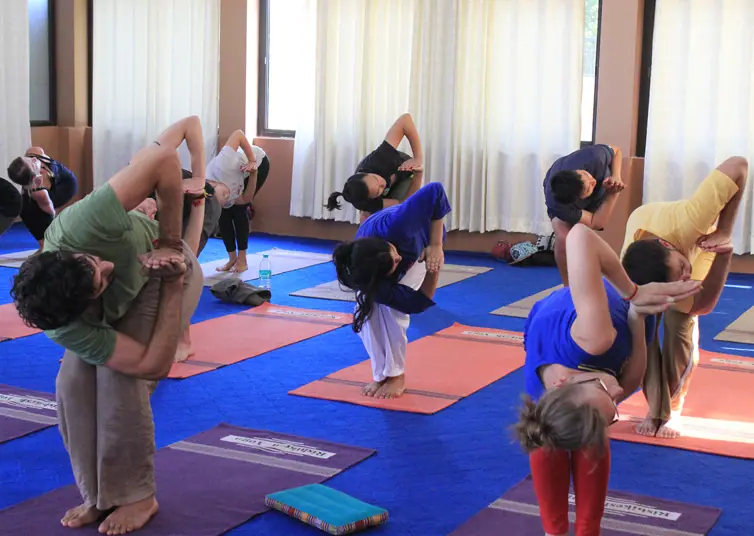
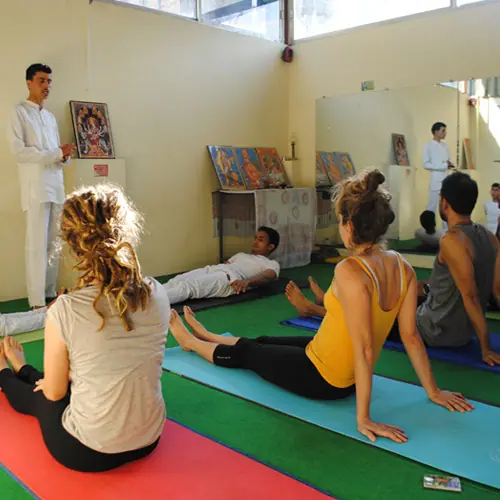
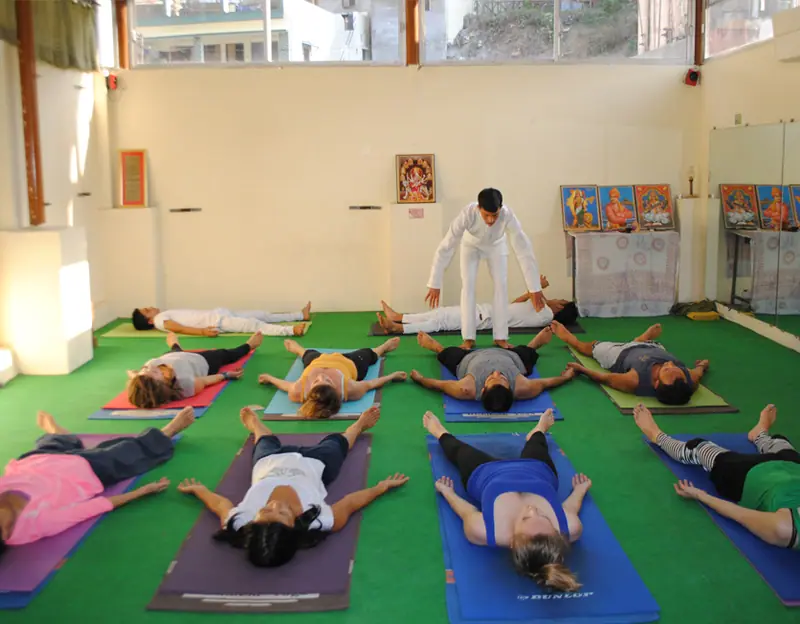
In a led class the teacher counts every vinyasa for the group. In Mysore style each student practises at their own pace while the teacher gives individual adjustments. We use both formats during teacher training.
Is Ashtanga right for beginners?
Yes, with sensible modifications. A beginner may practise only up to the standing postures and the finishing sequence and add new postures as strength and flexibility grow. For a softer flowing style, see Vinyasa flow.
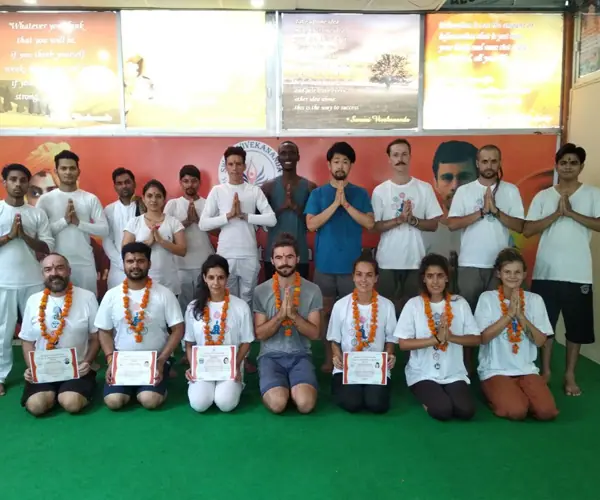
Ashtanga Vinyasa is taught daily in our 200 hour and 300 hour yoga teacher training, and as a drop-in class in our daily yoga classes in Rishikesh.